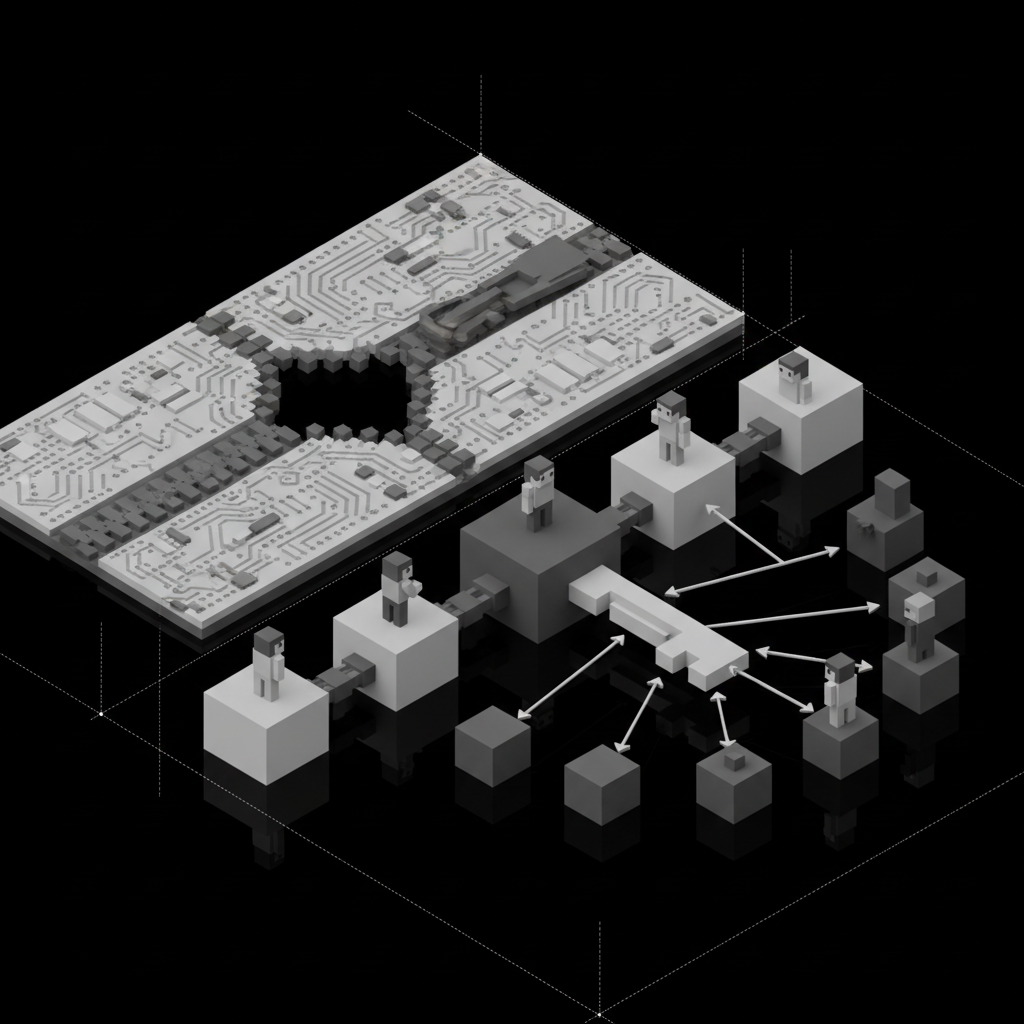
Stellar validators are scheduled to vote on July 8, 2026, to activate Protocol 27 "Zipper," which ships CAP-0071-01, a mechanism that lets custom Soroban smart contract accounts delegate authentication to another address.
The change would make social recovery wallets and modular multisig schemes cheaper and simpler to build on Soroban after the upgrade passes.
What Protocol 27 changes
Before Protocol 27, a smart account needed a separate authorization entry for every delegated signer. That increased transaction size and complicated off-chain simulation.
CAP-0071-01 introduces two new host functions, delegate_account_auth and get_delegated_signers_for_current_auth_check, and a new credential type, SOROBAN_CREDENTIALS_ADDRESS_WITH_DELEGATES.
Together, they collapse multi-signer flows into one authorization step. Delegation is recursive: any account that holds delegated keys can delegate further, enabling nested multisig hierarchies.
Stellar upgrade timeline
The Stellar Core v27.0.0 release candidate activated on testnet June 18, 2026. The full tooling stack, including Core, RPC, SDKs, and Horizon, shipped in stages between June 5 and June 12.
Mainnet currently runs Protocol 26 "Yardstick," activated May 6, 2026 on Stellar Core v26.1.0.
Why the vote matters
Protocol 27 is Stellar's first upgrade since Soroban smart contracts shipped that directly removes a developer pain point for smart account design. Developer wallets needed workarounds before. If validators approve the July 8 vote, the account abstraction path becomes cheaper and simpler.
On the institutional side, DTCC announced May 27, 2026 that its DTC tokenization service will add Stellar as its first public blockchain, targeting live tokenized assets on the network in the first half of 2027. Protocol 27 expands what institutional settlement builders can deploy on Stellar ahead of that window.