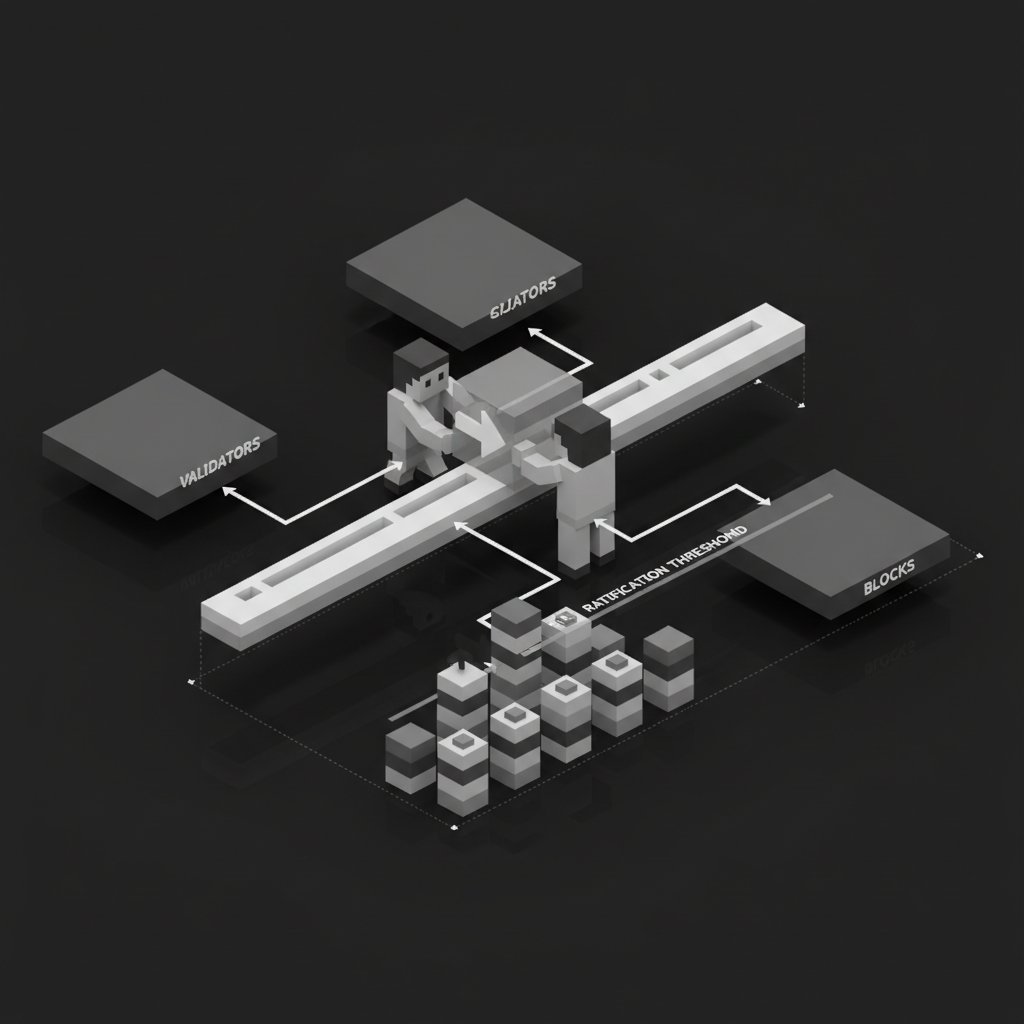
Cardano's Van Rossem upgrade, Protocol Version 11, entered its mainnet activation window June 27, 2026, with the earliest possible enactment set for June 28. DReps have cleared their ratification threshold; stake pool operators and the Constitutional Committee have not.
Governance vote
The hard fork initiation action was submitted on-chain June 16, 2026 (Epoch 637), triggering a vote across three governance bodies. As of Intersect's June 26 weekly update, delegated representatives (DReps) stood at 62.55% approval against a 60% threshold. Stake pool operators (SPOs) were at 30.95%, with 51% required. The Constitutional Committee had cast one of five votes needed.
Voting closes July 18, 2026 (Epoch 644). Enactment can follow in any epoch from June 28 through July 23, depending on node operator adoption.
Node adoption is ahead of the governance vote. 86% of Cardano block production ran on node v11 during Epoch 639, while exchange readiness reached approximately 77.37% by liquidity.
What Protocol Version 11 changes
Protocol Version 11 is an intra-era hard fork. No new ledger era launches. It improves Plutus smart contract performance, tightens ledger rules, and strengthens node-level security, while laying groundwork for Dijkstra, the next era that will eventually carry the Leios scaling design to mainnet.
The upgrade marks the first time a Cardano hard fork has been initiated through Voltaire on-chain governance, requiring DRep, SPO, and Constitutional Committee sign-off rather than a scheduled update from the founding entities.
Why Van Rossem
The hard fork is named for Max van Rossem, a developer, stake pool operator, DRep, and Constitutional Convention delegate in the Cardano ecosystem who died in October 2025. A community naming proposal received 83.62% DRep support, backed by 4.44 billion ADA.
Cardano's Ouroboros Leios scaling upgrade, targeting 30 to 65 times current throughput on its Musashi Dojo public testnet, is a separate development track and is not part of this hard fork.